


Wondering how to help someone who is grieving?
Being a source of comfort for a grieving friend or family member is something that we all want to do. All we want to do is take his or her pain away.
Unfortunately, we don’t have the power to simply wash away the grief. Feelings of grief are natural and mourning is a vital step in the healing process.
Nevertheless, helping a grieving friend walk the path of grief so that he or she feels less lonely on the journey is something that you can absolutely do.
In this guide on how to help someone who is grieving, we provide you with practical advice on what to do and say, and what to avoid.
The foremost is knowing that you should not be afraid of seeing someone’s raw emotions, no matter how painful.
There is a beautiful African proverb that says: “Sorrow is like a precious treasure, shown only to friends.”

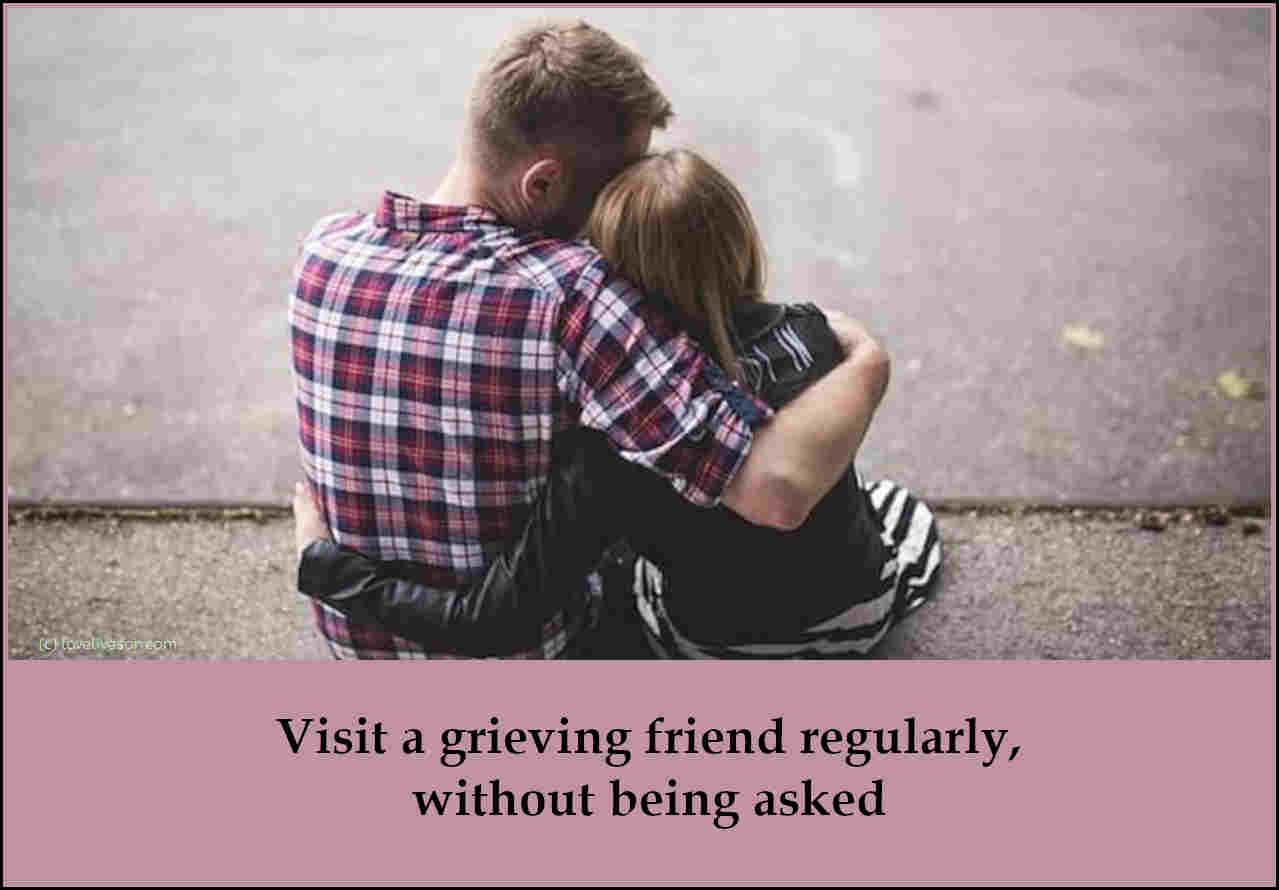
1. Visit Regularly, Without Being Asked
When it comes to how to help someone who is grieving, the most important thing you can do is be there for him or her.
After Sheryl Sandberg — former Chief Operating Officer at Facebook — lost her beloved husband, Dave Goldberg, one of her social media posts went viral.
In that post she shared that a friend circled her house a number of times in her car, unsure of whether to enter.
The truth is that it’s hard to be around someone who is really hurting. We struggle with what to say, what to do, and how best to support him or her.
It can be tempting to simply write a note, or send a text message, so that we can avoid having to witness their suffering.
In his online post for Time magazine on June 3, 2015, Rabbi David Wolpe poignantly writes that Sheryl Sandberg’s post has something valuable to teach us: “No one is eager to enter a hospital room or a house of mourning.
“I do it all the time — it is part of my role as a rabbi — and yet so many times I have stood right outside the room, gathering up my strength for what I knew I would face.
“The very difficulty makes the comfort that much more precious. Reach out, let people know that you are here and that you care.
“Show them that their suffering moves you, but does not scare you. Why else, in the end, are we put on this earth?”
We should also remember that grief does not end after the funeral is over. On-going support from friends and family can be a tremendous comfort to a grieving person, who will likely need it for a long time to come.
Make sure to check on how he or she is coping with their grief on a regular basis.
If you are truly invested in how to help someone who is grieving, diarize in your calendar dates that will be significant to him or her.
This included birthdays, anniversaries, and special holidays. Your grieving friend or family member will need support during these particularly difficult times.
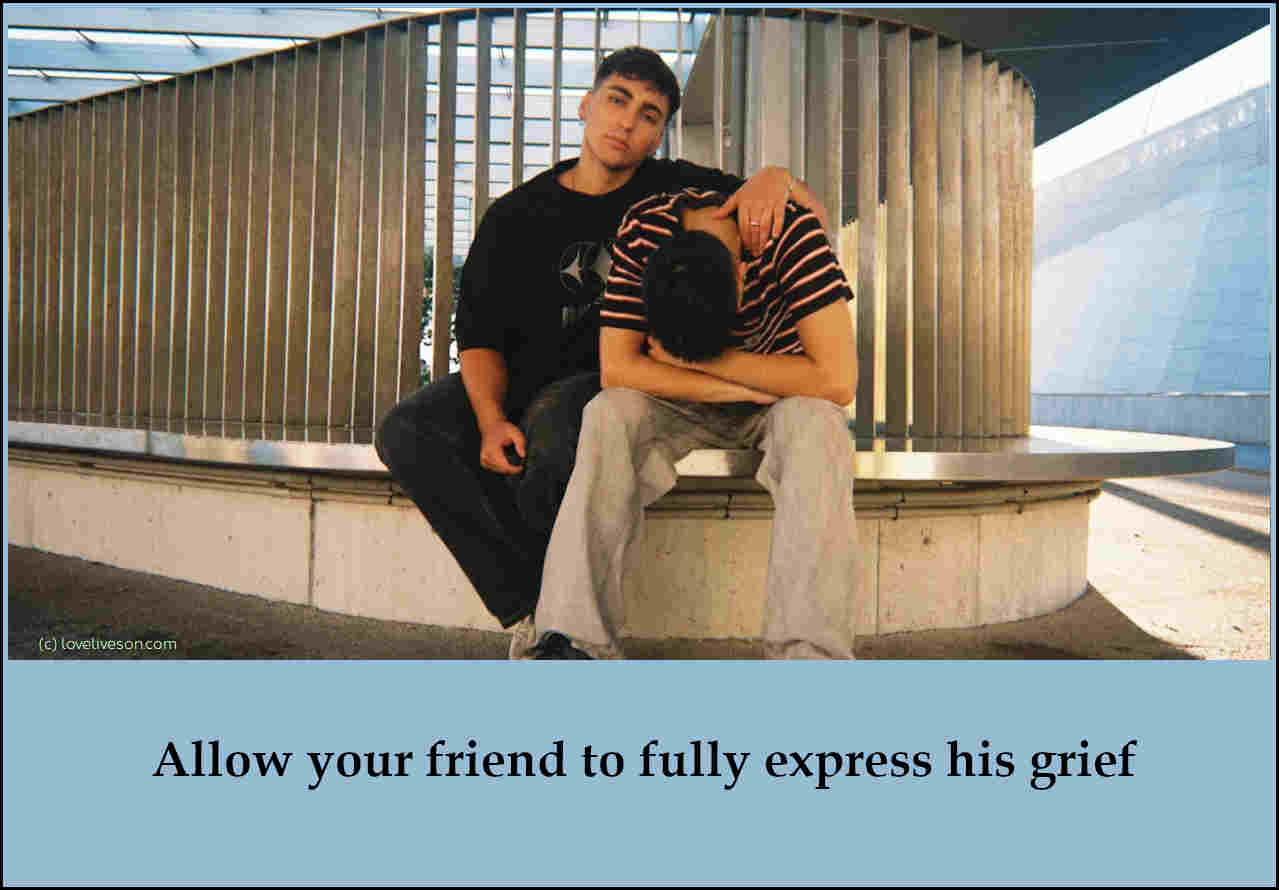
2. Allow Him or Her to Express Grief in His or Her Own Way
Healing from grief is a gradual process, with many different “stages” in the journey.
While psychologists have identified common mental states that occur on the journey, how an individual processes his or her loss is as unique as a fingerprint.
When it comes to how to help someone who is grieving, be prepared for the fact that bereaved persons may exhibit a variety of emotions and behaviours in their healing journey.
They may become very angry and quick to get into an argument.
They may cry constantly and become withdrawn and isolated.
They may also refuse to show any emotion and act as though everything is “just fine”.
It is important to not tell bereaved people how they should be coping or chastise them for their feelings.
You should also refrain from telling them that they “must talk about it” or that you “know how they feel”.
Again, it’s vitally important to understand that everyone grieves differently.
Bereaved people need to not feel judged for what they feel and how they express difficult feelings.
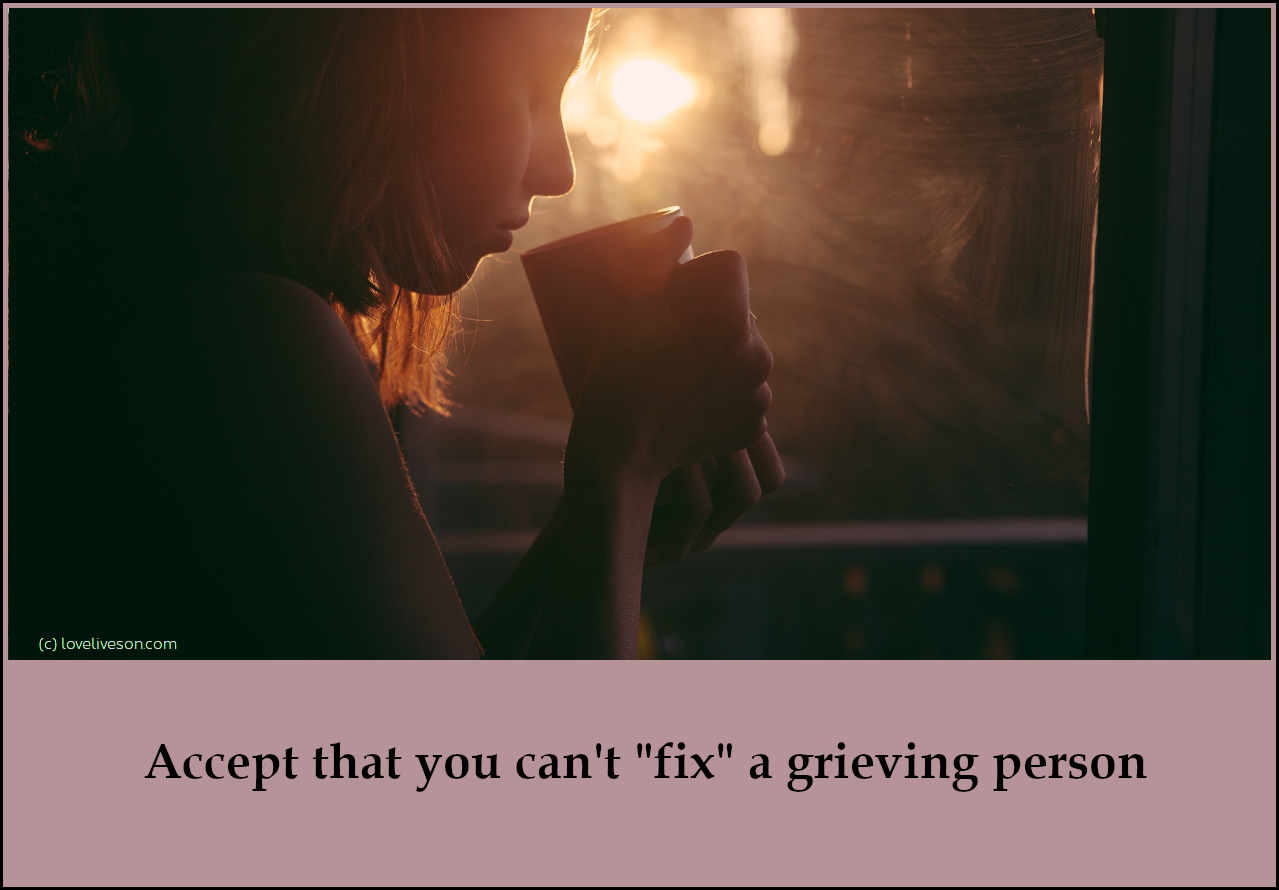
3. Accept That You Can’t “Fix” His or Her Feelings
When you care about someone, it is natural to want to take away the pain and to make him or her feel better.
But when it comes to grieving, you need to accept that the grieving process is beyond your control.
There is nothing you can say or do that will remove the pain. Grief is not something you can “fix”.
In fact, trying too hard to cheer up bereaved persons by overwhelming them with gifts or activities in an attempt to distract them from their pain could have a detrimental effect.
In order for them to get to a place of healing, he or she must first deal with their feelings of loss.
So when considering how to help someone who is grieving, always keep at the forefront of your mind the fact that no one can simply leapfrog over all of the necessary stages of grief.
4. Acknowledge His or Her Loss
When it comes to how to help someone who is grieving, there is something that you can do that is simple, yet powerful.
Acknowledge his or her loss. You many need to do it many times.
When our friend or family member is in pain, it’s natural to try and avoid bringing up the deceased’s name or memories because we fear causing further pain.
However, this tactic is unhelpful.
Do not try and gloss over the reality of loss and pain with platitudes like, “it was his time,” or, “she’s in a better place now.”
Do not make empty promises like, “things can only get better from here.”
These types of statements are a denial of the reality of the situation and are simply not helpful.
It is much better to acknowledge that they have suffered a great loss, and to tell them that you are truly sorry for what they are going through.
Also reassure your grieving friend or family member that you will always be there to lend a shoulder to cry on.
A few years ago, a good friend suffered the stillborn birth of her first child.
The baby was born with severe deformities, including a missing part of his skull. My friend was understandably devastated.
Years later, when we talked about that difficult time, she said that it really hurt when well-intentioned family members and friends would try and console her by saying comments like, “it’s better this way, as he would not have had any quality of life.”
She said that those kinds of comments made her want to scream.
She simply wanted acknowledgment of how much she loved her baby, and how much she had lost.


Related Articles




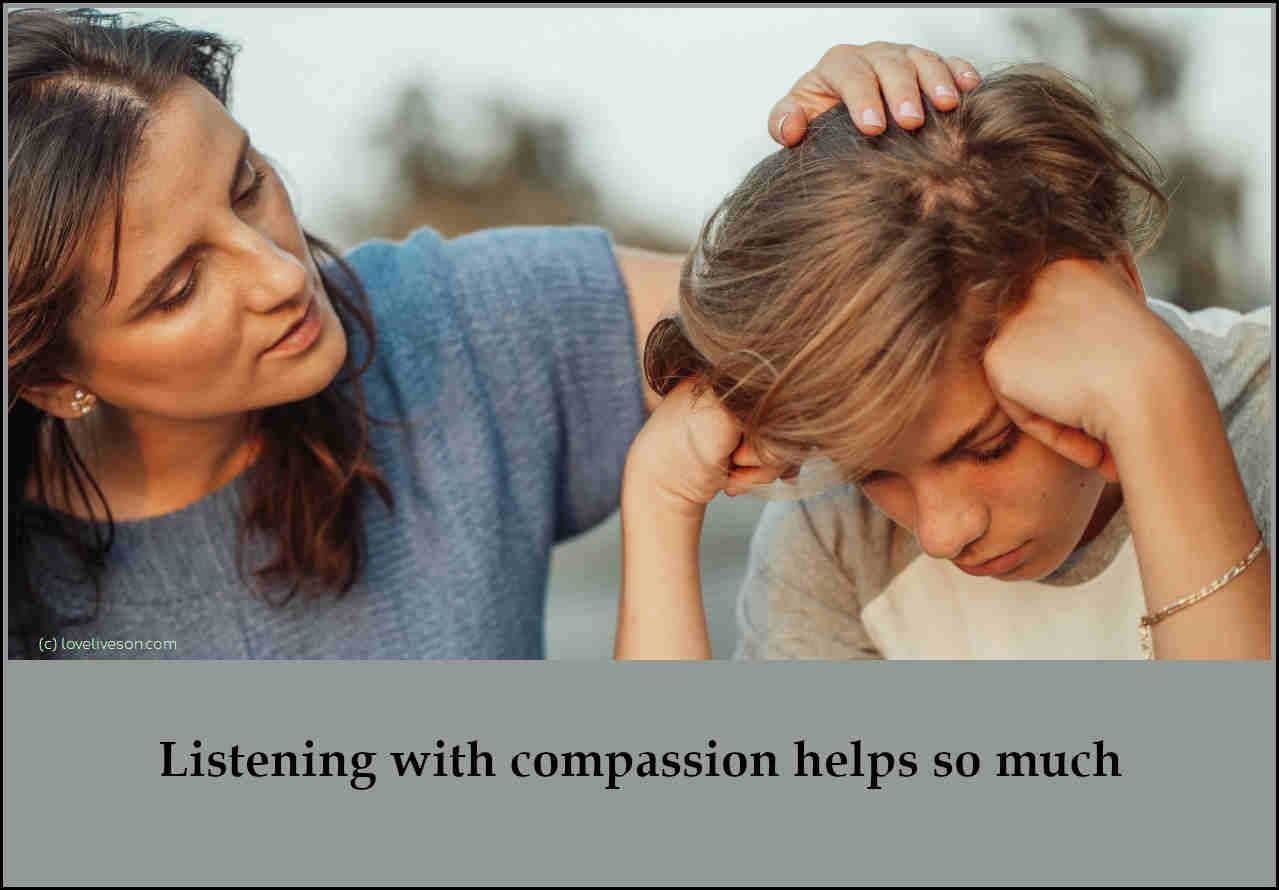
5. Listen Without Judgment
When it comes to how to help someone who is grieving, listening without interruption or judgment is sage advice.
Be less concerned with what you should say to make them feel better. That’s not what your grieving friend or family member needs.
Do, however, let them know that he or she can talk to you anytime about how they are feeling. Your presence is what is most important.
Never demand that he or she disclose to you information that he or she may not be ready to talk about.
When they are ready to talk, actively listen to their thoughts and concerns without interruption.
Never judge what the bereaved person is saying.
Do not make statements like, “you shouldn’t feel that way,” or “you’re just being oversensitive right now,” or “you’re just not thinking clearly given the circumstances.”
Instead, reflect back the thoughts and feelings he or she is expressing as s sign that he or she was heard.
For example, he or she may say: “I feel terrible that I wasn’t able to go to the hospital as much as I wanted to because I couldn’t get the time off work”.
You would simply reply: “It sounds like you are struggling with feeling guilty because you weren’t there when you wanted to be”.
Again, don’t judge whether or not the bereaved person should or shouldn’t feel the way they do.
Simply acknowledge that complicated feelings is something that he or she is struggling with.
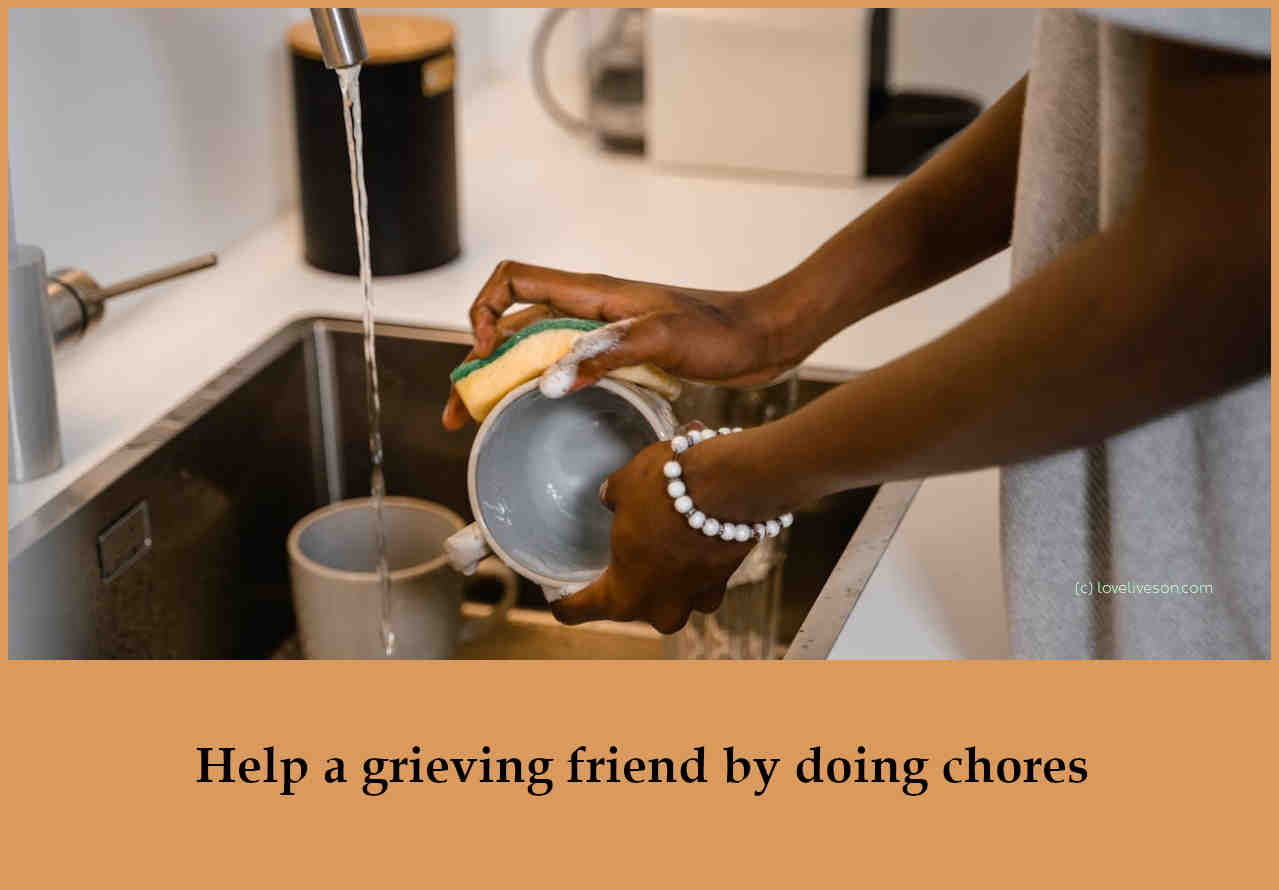
6. Help With Chores
Most guides on how to help someone who is grieving often forget to include practical acts of support, like helping with chores!
Unfortunately, the world doesn’t pause when a person is dealing with grief.
Funeral arrangements have to be made, friends and family need to be notified, and the deceased’s affairs need to be set in order.
In the immediate aftermath of a loss of a loved one, such tasks can be incredibly overwhelming for the grieving person.
Offer your help wherever possible.
Let him or her know that he or she doesn’t have to carry the burden of responsibilities all on their own.
After the funeral is over, the grief will still be fresh.A bereaved person may not be able to cope with routine day-to-day activities.
There are many ways you can make everyday life a little easier for them.
For example, you could help with mowing the lawn, walking the dog, buying groceries, cooking and childcare.
Helping with routine day-to-day activities will let the bereaved person know how much you care and give him or her a much-needed break.
If you are in a position to offer a helping hand, be specific about the tasks you will do and when.
Obviously, you need to be reliable and follow through with your promises!
Your acts of service will be appreciated more than you can even imagine.
7. Consult a Mental Health Professional if You See Warning Signs
It is common for a person who’s dealing with grief to feel depressed, angry, confused and withdrawn from others during the grieving process.
However, if these symptoms are prolonged and do not fade, or if they intensify over time, then there might be a more serious problem that requires professional help.
If you are concerned with how to help someone who is grieving, particularly if you see important warning signs, seek professional help for your friend or relative.
You should be on the lookout for behaviour such as:
- Drug use or excessive drinking
- Risky behaviour
- Severe and prolonged depression
- Talking about dying or suicide
- Difficulty completing daily tasks
- Excessive feelings of anger, sadness or guilt
- Continued withdrawal from friends and family
- Excessive weight loss
- Numbness or inability to show or experience joy
Although many of these symptoms are normal in the days and weeks after a traumatic loss, prolonged symptoms might indicate that there is a more serious problem that needs to be addressed.
If your friend is exhibiting any of these signs over the long-term, you should call an experienced grief therapist for advice on what your next move should be.
May we suggest visiting Love Lives On’s Business Directory to find a skilled therapist in your local area.
He or she can provide your grieving friend or family member needed therapeutic advice with expertise and compassion.
Our Business Directory is dedicated to helping you find the very best end-of-life professionals, including grief counsellors, funeral homes, monuments makers, florists, celebrants, estate lawyers, and so much more.
Businesses with Featured Listings in our directory – the comprehensive listings that appear at the top of search results with photos, reviews, and map directions – have all been carefully vetted by our team so that you don’t have to take on this laborious task.

How to Help Someone Who is Grieving For a Long Time
When it comes to how to help someone who is grieving, it can feel like nothing you do is truly making a difference.
But nothing could be further from the truth!
Your presence, even if you are simply sitting in silence, is everything.
Tell your grieving friend or family member how much you love them.
Listen to their pain, their frustration and anger. Listen without judgment. Provide them with a shoulder to cry on.
Be the person he or she yell sat when her or she don’t know what else to do. Be the person who consistently shows up.
Eventually, with the love and support of family and friends, and perhaps a qualified therapist, the grieving person will start to process the loss.

Additional Resources For How to Help Someone Who is Grieving
We hope you found this guide on how to help someone who is grieving a useful resource.
Did you know that Love Lives On has a comprehensive library of articles on grieving, funeral planning and celebrating a loved one’s life in unique ways?
Here are some other popular posts on our website:
- Learn about the 5 stages of grief and how to cope
- Best examples to inspire you when writing a eulogy
- 100+ special ideas to commemorate someone’s life and legacy
Finally, we must commend you for being the type of person that thinks deeply about how to help someone who is grieving.
It’s people like you that make the world a beautiful place for all of us, that remind us that while a life may have ended, love lives on.